

Breast Cancer in Men

Designed by Magnific
Breast cancer is typically known as a woman’s disease. However, 1 in every 100 breast cancer diagnoses in the United States is found in a man. This rarity has led to stigmatization among male breast cancer patients in social settings.
Breast cancer can happen at any age, but it is mostly found in older men. In the United States, the average age of diagnosis of male breast cancer is 68. This may be attributed to the common misconception that breast cancer is only found in women. Since most men do not expect to have breast cancer, they are not as watchful for possible symptoms or getting screenings like women.
The most common kinds of breast cancer in men are invasive ductal carcinoma and ductal carcinoma in situ (DCIS).
Invasive ductal carcinoma is where the cancer cells begin in the ducts and then grow outside the ducts into other parts of the breast tissue. It can also spread, or metastasize, to other parts of the body.
Ductal carcinoma in situ (DCIS) is a breast disease that may lead to invasive breast cancer. The cancer cells are only in the lining of the ducts and have not spread to other tissues in the breast.
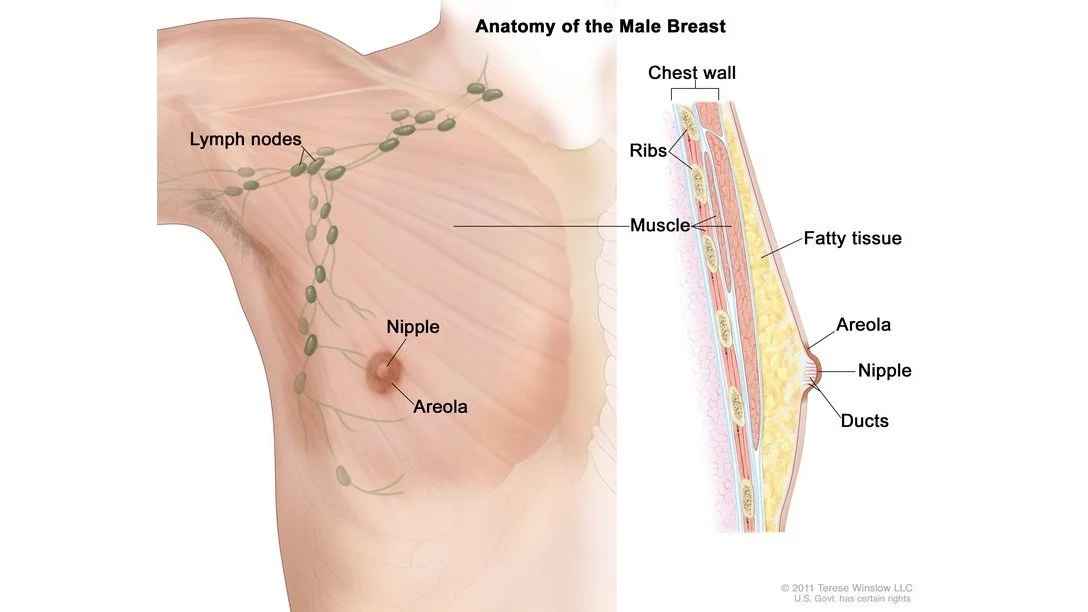
Illustration from the Centers for Disease Control and Prevention (CDC)
While breast cancer development is similar for both men and women, there are some differences between them. First, men tend to develop breast cancer at an older age than women. This may be caused by the failure to notice early symptoms due to the belief that only women can have it. Second, men are diagnosed at later stages than women. It is estimated that half of these men are diagnosed with Stage II, III, or IV breast cancer. Third, men have a higher rate of hormone receptor-positive cancer than women. Hormone receptor-positive cancer means that the cancer cells have protein receptors that bind to natural body hormones like progesterone or estrogen.
The Centers for Disease Control and Prevention enumerated the most common symptoms of breast cancer in men:
A lump or swelling in the breast
Nipple discharge
Redness or flaky skin in the breast
Irritation or dimpling of breast skin
Pulling in of the nipple or pain in the nipple area
There is no exact reason why some men develop breast cancer, but there are several factors that can increase their risk of getting one. Risk factors include age, family history of breast cancer, inherited gene mutations, Klinefelter syndrome, liver disease, alcohol use, obesity, and radiation exposure. It is best to talk to a doctor if you have a family history of breast cancer.
Without knowing the exact cause of breast cancer, there is no way to determine Hw to prevent it completely. Despite this fact, you can lower your risk by being physically active, eating nutritious meals, staying at a healthy weight, and avoiding or limiting alcohol.
Know more about breast cancer in older adults from Ca Care Association News.
